
Criminal Court Cases in Lewis County
Lewis County Court is the county’s main felony trial court. It sits on the third floor of the Lewis County Courthouse at 7660 North State Street in Lowville. The court also shares misdemeanor jurisdiction with local courts. The Unified Court System page for Lewis County Court lists weekday counter hours of 8:30 a.m. to 4:30 p.m. and a court telephone number of 315-570-2435. Town and Village Justice Courts handle arraignments, violations, misdemeanors, and the early part of many felony matters. A search limited to County Court can therefore miss a local case that never moved upstairs.
The Lewis County Clerk keeps County and Supreme Court records at the same courthouse. For a copy search, give the clerk the defendant’s name, docket or indictment number when known, and an approximate year. Ask whether the file is electronic, on paper, or archived. A local Justice Court keeps its own file, so the right court matters as much as the right name. The filed court record is the source for the charge that was prosecuted, the result, and any sentence. It is distinct from an arrest report held by the police or Sheriff.
Lewis County Felonies Change Courts
A felony can create two linked Lewis County court records. The first may be a local-court docket for arraignment and preliminary proceedings. If a grand jury returns an indictment, or another superior-court charging route applies, the later stages receive a County Court identifier. Keep both numbers. Searching only the first docket can make a case look unfinished, while searching only the County Court number can hide its starting point.
The official Lewis County Court information page identifies County Court’s felony role. The screenshot below provides the source view used for that distinction.
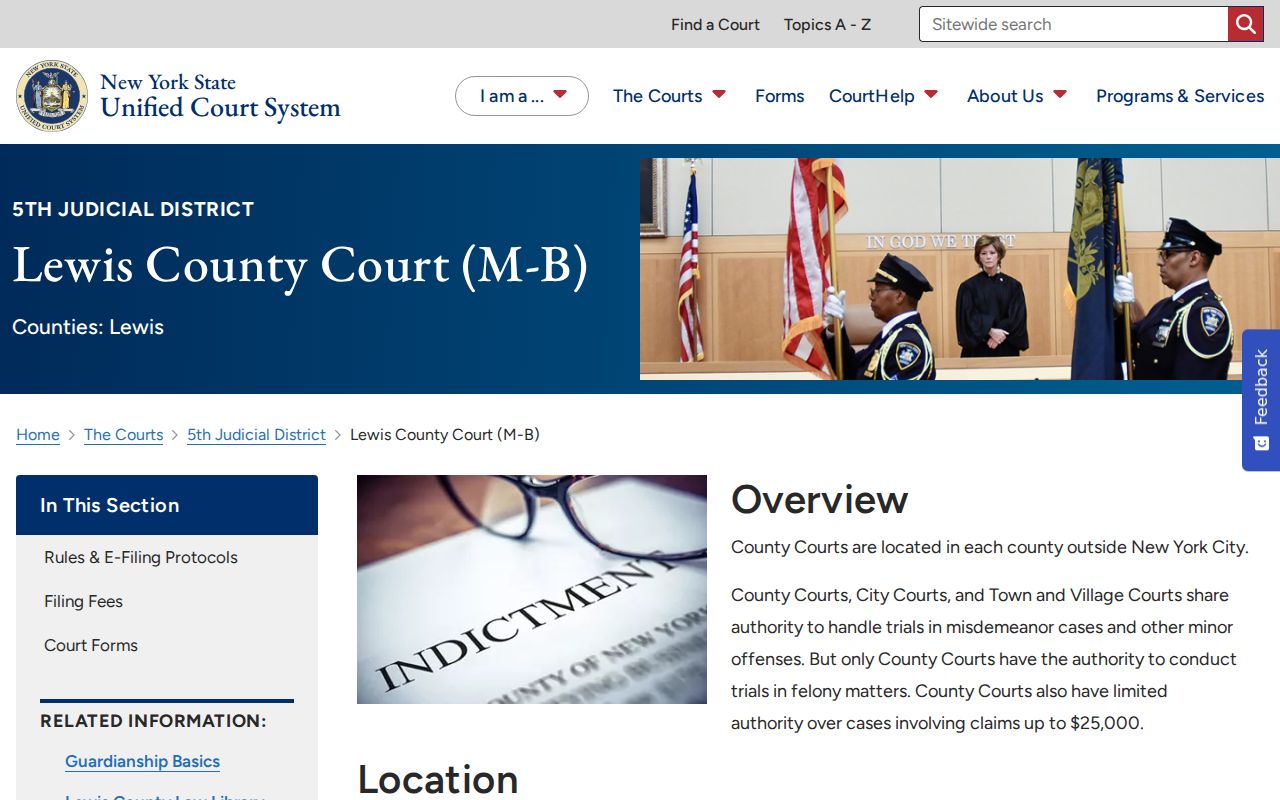
This split court path explains why a complete Lewis County court case lookup may require calls to both a Justice Court and the County Clerk.
Lewis County Case Record Searches
Lewis County is not listed in WebCriminal’s published current-case coverage. The reliable local route is the clerk for the exact court. The UCS-LRS2 Local Criminal Record Search Request offers a formal search when no direct local portal is available. It costs $5 for each consecutive two-year period or fraction, searches one named court, and uses an exact name and date of birth. It is a request, not an instant database.
- Identify the court from an appearance notice, ticket, docket number, or the place where arraignment occurred.
- Contact that clerk and provide the exact name, birth date, approximate date range, and known case identifier.
- Use UCS-LRS2 for a paid, court-specific search if the clerk directs you to the form.
- Check Lewis County Court as well when a felony may have moved from a Town or Village Justice Court.
- Request plain or certified copies from the record-holding clerk after confirming the file and current cost.
| Field label | Type | Required | Notes |
|---|---|---|---|
| Court name and address | Text | Yes | The request reaches only the selected court. |
| Requester contact details | Text | Yes | Name, address, phone, and email support delivery and billing. |
| Subject first and last name | Text | Yes | Each alias is a separate exact-name search. |
| Date of birth | Date | Yes | An alternate birth date requires another search. |
| From and to dates | Date | Yes | The range sets the paid two-year periods. |
| Signature and payment | Form entry | Yes | Follow the receiving court’s payment directions. |
Lewis County Clerk Access Tiers
The Lewis County Clerk publishes tiered prices for its general online records system: $5 for a guest document, $15 for all-day access, $125 for one month, or $600 for six months, plus $0.65 per printed image under CPLR 8019(f)(1). Those prices are unusually clear, but the page does not promise that every Lewis County criminal docket or document is indexed. Call 315-376-5333 before buying access solely for a criminal case. Confirm whether the desired record is covered and whether a paper or archived file requires a counter request.
The source image from the Lewis County Supreme Court and clerk information page shows the official court-side access context.
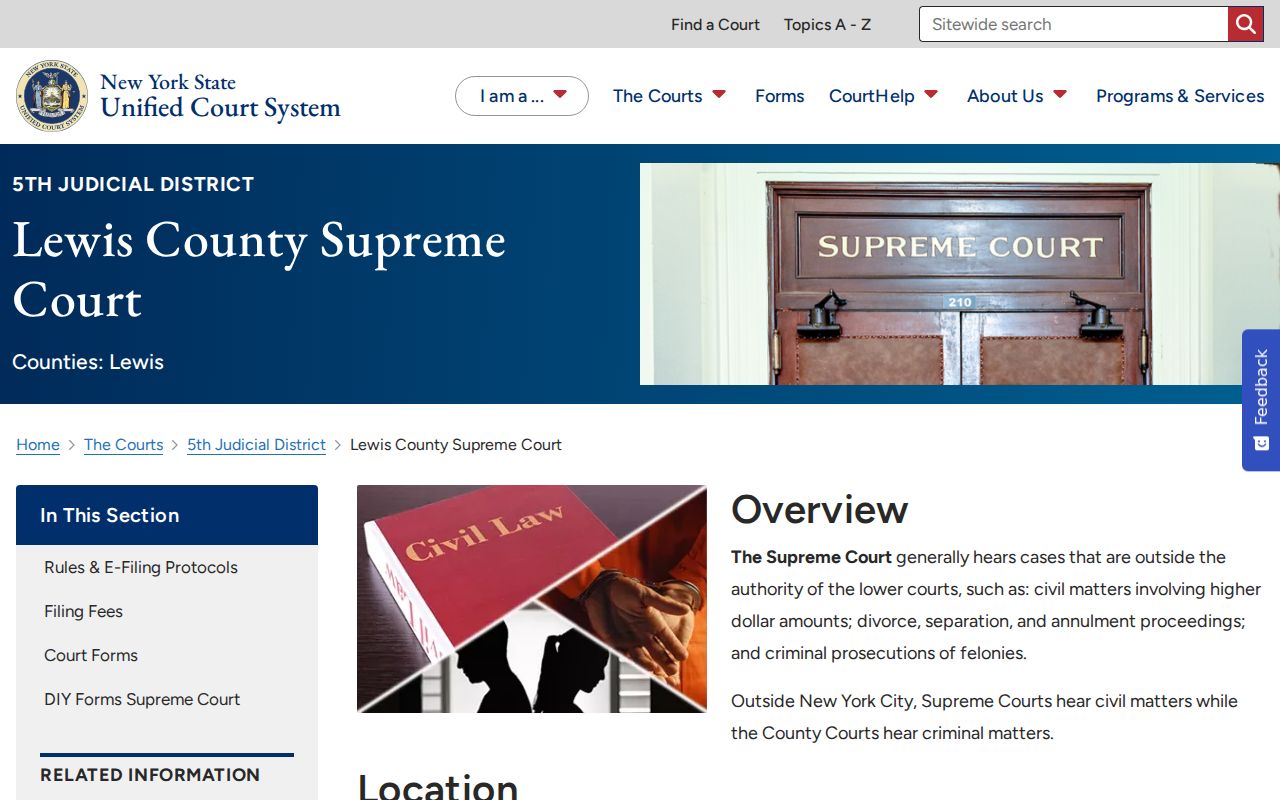
The practical choice is based on the file, not merely price: a one-time docket copy may call for the guest tier, while an older Lewis County criminal case may be available only through the clerk.
What a Criminal Case File Contains
A Lewis County criminal case file follows charges after they are filed in court. It can show how the accusation changed, what events occurred, and how each charge ended. Online views may offer only an index or selected unsealed documents. The clerk’s file may hold the accusatory instrument, motions, orders, and disposition proof. Police narratives, jail medical screening, and prosecutor work files are separate records and should not be expected in the public docket.
| Case number and court | The docket or indictment identifier, filing court, status, and key dates. |
|---|---|
| Charging document | The complaint, information, indictment, or other filed instrument stating charges. |
| Docket entries | Arraignments, counsel appearances, motions, conferences, hearings, pleas, trial events, and adjournments. |
| Calendar details | Appearance date, purpose, part or courtroom, and judge when publicly shown. |
| Disposition | Guilty plea or verdict, acquittal, dismissal, reduction, and public sealing status where available. |
| Sentence and orders | The court-imposed sentence, restitution or supervision terms shown in the public record, and final orders. |
A certificate of disposition is a clerk-certified statement of how a case ended. It is often the best proof when a person needs to correct a missing or wrong result on their own DCJS record.
Read Lewis County Case Outcomes
Do not stop at the first charge listed. An arrest charge can be reduced, replaced by an indictment count, dismissed, or resolved by a plea to a different offense. Read each count’s disposition and the sentence. “Adjournment” means the matter moved to another date. “Acquittal” means a not-guilty finding after trial. “Dismissal” ends a charge without a conviction. A blank or open-looking result may reflect a reporting delay rather than a pending Lewis County case.
New York’s felony sentencing statute is a useful source when a docket lists a felony class, but class alone does not reveal the actual sentence. Violent-felony, drug, repeat-offender, determinate, and offense-specific rules can change the range. The conviction statute subsection and the court’s sentence entry control.
The official statute source is represented in the image below.
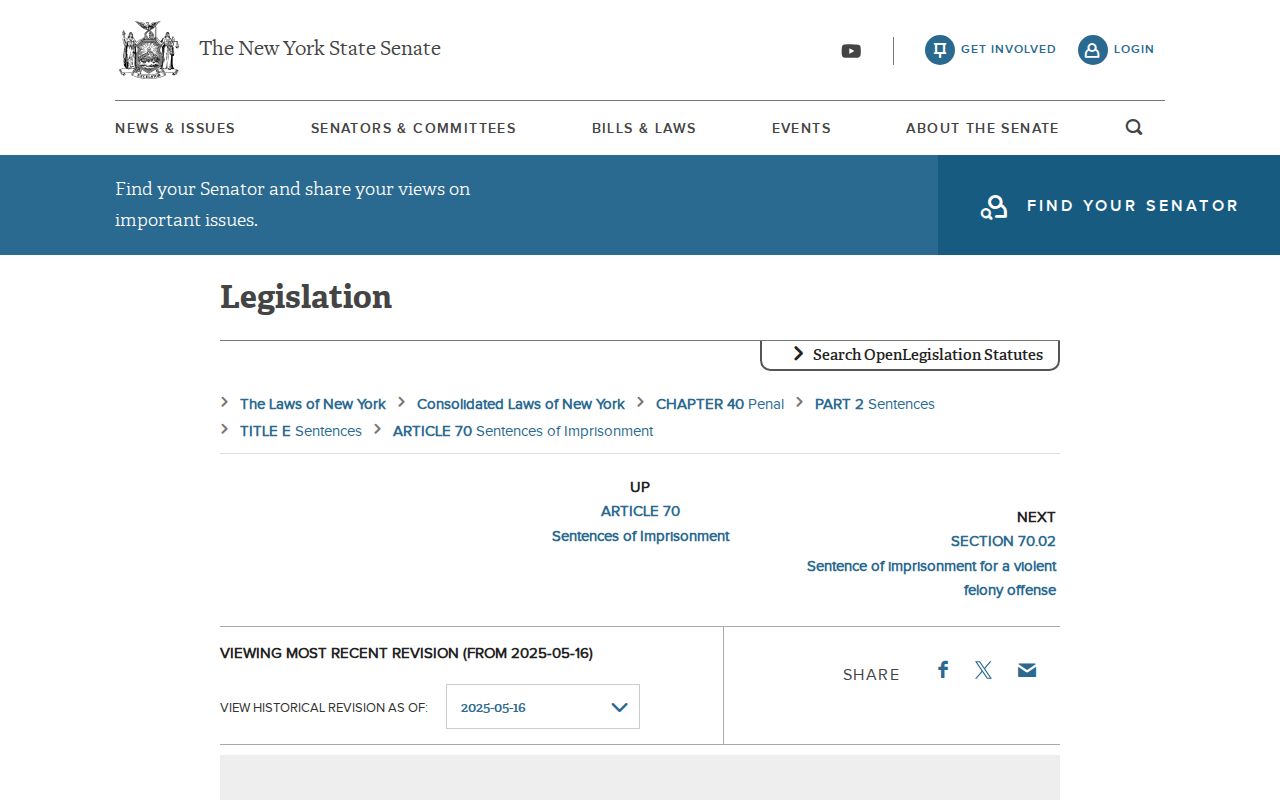
Use the law to understand the docket, then rely on the Lewis County clerk’s certified disposition for the actual outcome.
Criminal Case Stages in Lewis County
The court file begins after a charge reaches a clerk. A local arraignment states the accusation and addresses plea and release issues. A felony may then follow a preliminary and grand-jury path before it reaches Lewis County Court. Discovery, motions, conferences, and hearings can follow. The case may end through dismissal, plea, or trial. A conviction then leads to sentencing, and an appeal can create a separate appellate record.
Case flow: Charges Filed › Arraignment › Pretrial › Plea or Trial › Disposition › Sentencing
These stages explain why a recent arrest may not yet appear as a final Lewis County criminal case. For the earlier agency and booking trail, use the county’s Arrest Search channels, then return to the court record for the outcome.
Older Lewis County Case Files
Older Lewis County court cases may be paper files or archived records. Begin with the clerk of the court that handled the case and supply the exact name, approximate year, and any docket or indictment number. Ask whether the index and file are electronic, at the courthouse, or stored elsewhere. Also ask whether the requested copy should be plain or certified. A broad name request without a court or date range costs more time and can miss a case filed under an alias.
The County Clerk counter is open weekdays from 8:30 a.m. to 4:30 p.m. Court offices publish the same hours and close on state and federal holidays. Call before travel, especially when an archived file may need retrieval. The research did not confirm parking, entrance-security, phone-storage, or recording rules. The court’s ADA contact can help arrange an accommodation through 315-570-2435.
Statewide Lewis County Case Search
The OCA Criminal History Record Search, or CHRS, is the statewide public court-history option. It costs $95 for each exact name and date-of-birth search. Each alias or alternate birth date requires another search. A no-result response may be immediate, while a possible match is reviewed and is ordinarily emailed the next business day during CHRS hours. CHRS can identify covered cases, courts, arrest dates, charges, and dispositions, but it does not supply every pleading, order, minute, or certified copy.
Coverage has limits. Town and Village reporting from May 1991 through 2002 is excluded, 2002 through 2007 is limited, and comprehensive reporting begins in May 2007. Sealed records, violations, infractions, federal cases, and other excluded categories do not appear. CHRS is name-based. It is not the fingerprint-matched Personal Record Review held by DCJS, and a no-hit result is not proof that no record exists.
Access Rules for Case Records
Unsealed Lewis County court files are obtained through court rules and clerk procedures, not ordinary county FOIL. Judiciary Law Section 255 governs a clerk’s duty to search and provide specified records upon lawful request and fee. The source image below shows the statute page used for that access rule.
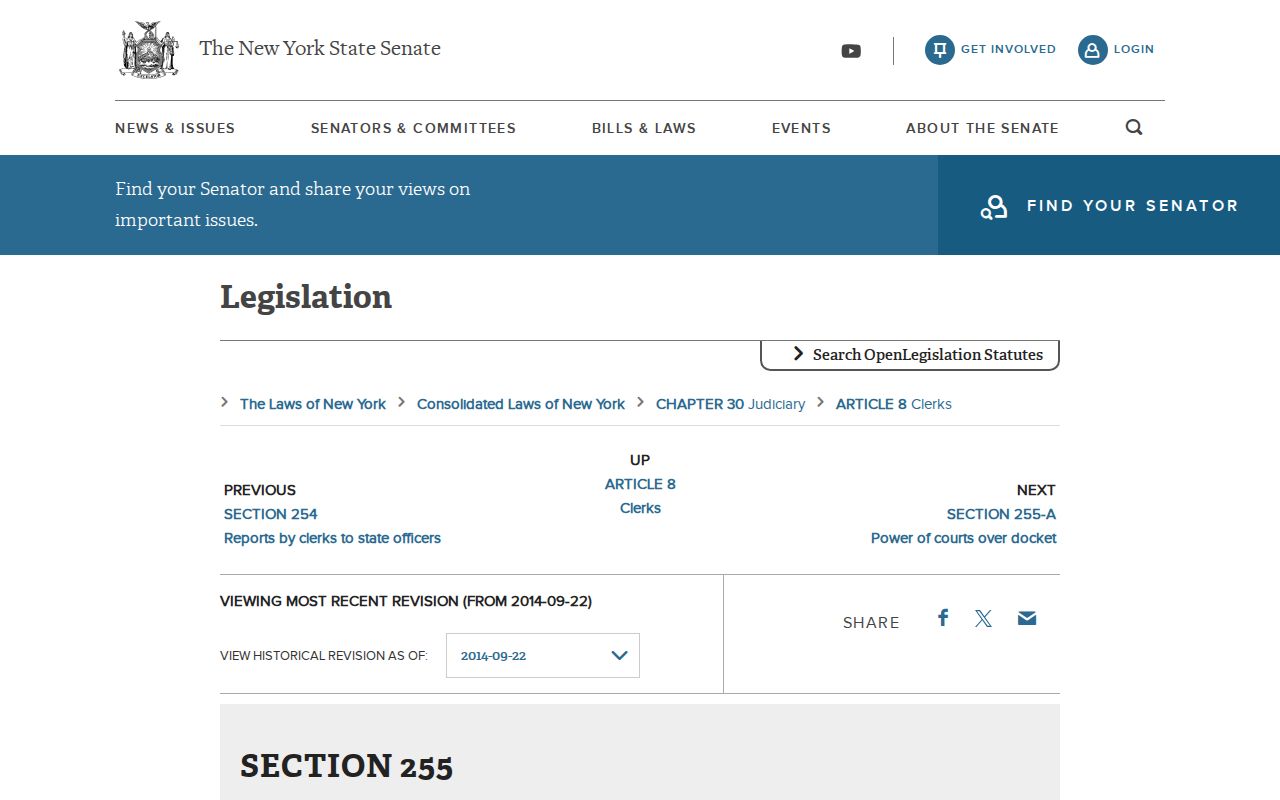
The statute does not override sealing or confidentiality. CPL sealing, youthful-offender treatment, juvenile rules, victim protections, and redaction of birth dates, Social Security numbers, addresses, and minor information can block or narrow public access. NYSCEF may show public documents where criminal material was electronically filed and remains unsealed, but its presence does not mean every Lewis County criminal file is online.
If a case does not appear, verify the name, date of birth, court, date range, and both local and County Court identifiers. Then ask the clerk whether the matter is archived, transferred, sealed, or outside that court. A person correcting their own state history can obtain a certified disposition and follow DCJS Personal Record Review challenge instructions.